Sunday, May 11, 2014

Devoted to Duty: The Price of Sacrifice


Mississippi Department of Wildlife, Fisheries and Parks, MississippiMaster Sergeant John Collum | Mississippi Department of Wildlife, Fisheries and Parks, MississippiMaster Sergeant John Collum, an officer with the Mississippi Wildlife, Fisheries, and Parks was killed on 5/9/14.  He was run down by a motorist while investigating a report of a prowler.

The first thought of many on hearing this may be, “Why was he investigating a prowler?”  Those that would ask that question do not have an understanding of the role of a wildlife officer/game warden/conservation officer in the communities they serve. 

People come to count on wildlife officers to fill roles that extend beyond the enforcement of fish and wildlife laws.  Wildlife officers become baseball coaches, deacons in their church, scout leaders, reading buddies at the elementary school, and confidants to many who simply consider the officers as friends. So in a pinch, a neighbor may call their wildlife officer first for non-wildlife offenses – the neighbor knows who they can count on for a response.

In many small communities there are too few law enforcement officers.  It doesn't matter what uniform an officer wears - they all have to work together to make their community safe.  Deputy sheriffs, state troopers and city police officers know they can count on their wildlife officers to back them up when things get tight.  In turn, wildlife officers depend on these same officers for backup on those dark country roads.

I recall meeting Sergeant Collum in 2012 when he was selected as the officer of the year for the Southeastern Association of Fish and Wildlife Agencies.  He displayed all the traits we find most attractive and valuable in wildlife officers.  He displayed a quiet confidence that did not require boasting or attention.  His colonel described him as a role model and an example to other officers.  Most of all he was a servant to those in his community.
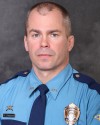
Sergeant Patrick Scott Johnson | Alaska State Troopers, Alaska
Sgt. Johnson
Trooper Gabriel Rich | Alaska State Troopers, Alaska
Trooper Rich
             Alaska State Troopers, Alaska


Tonight, the cohort at the NACLEC leadership academy watched the memorial service for Alaska State Troopers, Sgt. Scott Johnson and Trooper Gabe Rich, who were killed in the line of duty on 5/1/14.  There are two Alaska troopers in our class.  During that service, the words “sacred honor,” “duty,” “sacrifice,” "devoted" and "dedicated" were used many times to describe the slain troopers.  Those same words will be used again in a few days as we honor Sgt. Collum's sacrifice.

No law enforcement officer's family should have to wait until their funeral to hear those words used to describe their loved ones' lives.  The officers live out those descriptions everyday.  The thing is, they just consider that as what they do - nothing more and nothing less.  They don't do it for the pay or accolades; they do it because it is who they are.


Wednesday, May 7, 2014

Pulling in All Directions

We often talk about the necessity of having everyone on a team pulling in the same direction.  I had a friend back in Rutherford County who was a retired dairy farmer.  One of his hobbies was working large Belgium draft horses.  He confirmed the notion that a successful team of horses has to work together and pull in a common direction.  We often roll these metaphors out when explaining strategic direction.  But, does everyone have to move in the same direction in order to accomplish the mission?
h
This week I am at the National Conservation Training Center in Shepherdstown, West Virginia.  I am here with four other covaches/presenters for the NACLEC Leadership Academy.  The academy has drawn wildlife officer/game warden/conservation officer leaders from across the United States and Cana.  The goal of the program is expose the students to the adaptive leadership skills needed to successfully lead their organizations into the future.

One challenge each state faces is engaging a more diverse group of stakeholders while maintaining the relationships with our traditional constituent groups of hunters and anglers.  There is a great risk of alienating one group by appearing too cozy with the other.  So, like my old friend’s horses, the question becomes, “How do we hitch these seemingly different entities together and get them to pull in a common direction?”

We went off site yesterday for a series of team building exercises.  The purpose of the activities were to increase the effectiveness of interpersonal communication, to demonstrate how to break complex tasks down into manageable steps and to show how things that may be impossible to do alone can be accomplished when working in conjunction with others.  One of the exercises disputed the concept of pulling in the same direction.

The teams were tasked with moving a tennis ball from an upright piece of PVC pipe, through an obstacle course and it back to the pipe.  The ring had several multicolored pieces of cord attached and was slipped down over the pipe.  The team members each took a cord and pulled it taunt.  They then eased the ring up the pipe and lifted the ball free with the ring.  They had to balance the tennis ball while maneuvering it through the course.


The interesting thing was that the team members had to pull in different directions in order to achieve their mission and the tension had to be maintained by all parties.  Pulling too hard was as damaging as not pulling hard enough – too much or too little tension led to failure.  I saw four keys to success.

First the team members had to communicate effectively.  They had to give directions that were clear and precise.  There was no room for assumptions or ambiguity, and each person had to understand what was expected of them.

Second, the focus had to be on the objective or mission and not an individual.  All eyes had to be on the ball. Even a momentary glance from the objective could have meant failure for the group.

Third, someone had to be willing to concede and release some tension while the opposing force had to pull a bit harder.  Otherwise there would have been no movement and the group would have stood still.  Coordinated give and take allowed the group to move.

Finally, the ease of completing the task increased with the number of partners.  The tension was more forgiving as the number of team members increased.  However, more ears increased the need for clear communication exponentially.

I guess all this leads to an obvious question; “How many game wardens does it take to move a tennis ball?”  The best I can tell, there can’t be too many.

Saturday, May 3, 2014

The Great Diversion


One of my favorite stories from the Civil War was related in a biography of Stonewall Jackson by a confederate soldier who was positioned on a mountain top overlooking the Shenandoah Valley.  He watched as the valley filled with an unending column of Union soldiers.  He reported that it was the most people he had ever seen in one place and that the blue clad troops stretched beyond his vision.

Then the lookout saw a small group of cavalry streak into view, slashing their way through the Union line.  Leading the mounted soldiers was a man on a white horse.  The Confederate instantly knew that it was Turner Ashby.  Ashby struck a dashing figure in his black feathered hat and flowing beard.  He was known as the “Black Knight of the Confederacy.” 


Painting by John Paul Strain
Like many Southerners, I can rattle off a list of ancestors that fought in the war.  I admit to a strong bias when I view the Confederate effort.  Soldiers like Ashby fuel that bias.  I point to him and think, “Now there is a man.  A man taking it to the enemy against overwhelming odds. He is leading from the front and making a difference.”

At the risk of alienating my entire region, I would like to make one small point.  Ashby simply slowed down the column of Union soldiers.  As he cut through the lines, the Union formed a skirmish line in case he returned, but ultimately the soldiers continued their march.  I am not questioning the heroics or tactics of the action.  My point is that all it did was slow the inevitable.  The Yankees marched on.

But, that image, the one captured in the painting above, is one we love.  I mean just look at the details of the painting.  The Black Knight and his white war horse, alone, surrounded by enemy soldiers.  Two soldiers are reeling from the attack while one shouts an alarm.  Only one Union soldier fights and he takes a riflestock to a sword fight - a poor choice by any measure.  How can we not pull for the Confederate hero?  What man doesn’t want to be memorialized as the Black Knight?

Last year, Operation Something Bruin, a multi-agency undercover investigation into illegal bear hunting, was wrapped up with numerous arrests in North Carolina and Georgia.  The majority of those arrested have plead guilty.  A handful of the more serious violators are awaiting trial in federal court later this month.  They face substantial jail time if convicted.

In recent months, attorneys and family members of those individuals have orchestrated a series of events designed to draw attention away from the prosecution of these cases.  They have lured local politicians into the fray with the hope that the political voices will give credibility to their accusations of misconduct by officers. The politicos show up because in small mountain communities 25 votes can swing an election (they exercise a form the Biblical principle, “…where two or more [voters] are gathered, there I will be also).  The accused have held “forums” where they sought sympathy from the crowd.  Those on the extreme right have used this case to drum up support by pointing to this as another ploy by the government to oppress the citizens.  

Then the mainstream media got involved.  It is interesting that the local television station aired their “investigative report” as the Nielsen sweeps period began for May.  This “hard hitting” piece of journalism showed photos of the undercover officers (let’s not be concerned for their safety) and threw around a monetary cost for the investigation that is a pure fabrication.  The most disturbing aspect of the two-part series is that it amounted to a ten minute infomercial for the lead defense attorney in the case.

All of these are diversionary tactics designed to steer attention away from the facts of the case.  It is very similar to Ashby’s strike through the Union line.  It was a pain in the rear for those intimately involved at the point of the attack, but the mission moved forward.

The thing that saddens me most is that there are real people at the heart of this case.  Both the officers and defendants are the ones taking it on the chin at the expense of those seeking gain from the case.  They are the lookouts on a mountain top or foot soldiers marching into battle.  The attorneys, politicians, and reporters all want to play the role of “Black Knight,” milking the votes, money, ratings or support from a quick appearance before moving on to the next event.

Meanwhile, the foot soldiers march on.